If you’ve ever come across the abbreviation WLW in a text message, Instagram bio, TikTok caption, or dating app profile, you might have paused and wondered what it means.
In today’s digital world, short forms and acronyms evolve rapidly, especially in online communities and social spaces.
People search for “WLW meaning in text” because they want clarity—whether they saw it in a conversation, a hashtag, or someone’s profile description.
Understanding modern abbreviations is essential for navigating social media, dating apps, and online discussions confidently.
Some acronyms are casual slang, while others carry important identity-related meaning. WLW falls into the latter category and is widely used in LGBTQ+ spaces and beyond.
This article explains the definition, background, contexts, misconceptions, similar terms, and how to respond appropriately when you encounter WLW in conversation.
Meaning & Definition
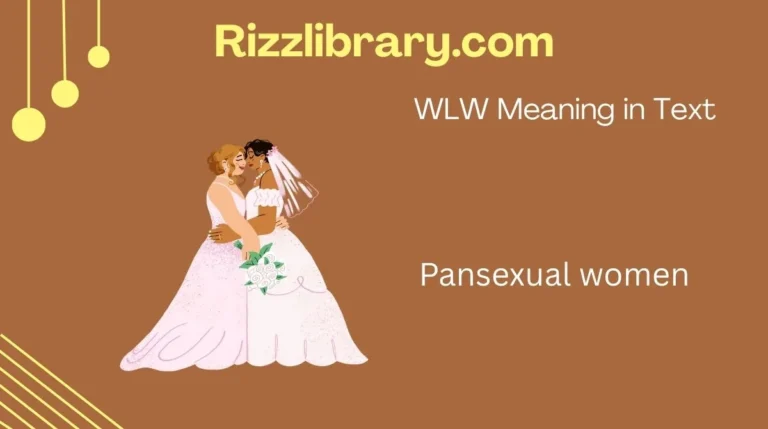
WLW stands for “Women Loving Women.” It is an inclusive term used to describe women who are romantically, emotionally, or physically attracted to other women.
Unlike labels that strictly define sexual orientation (such as “lesbian” or “bisexual”), WLW is often used as a broader umbrella term. It includes:
- Lesbian women
- Bisexual women
- Pansexual women
- Queer women
- Any woman who experiences attraction to other women
The phrase focuses on attraction and connection rather than rigid identity categories. Because of this, it is commonly used in inclusive spaces where individuals may not want to define themselves with a specific label.
In text conversations, WLW typically appears in:
- Social media bios
- Hashtags (#wlw)
- Dating app descriptions
- Community discussions
- Fandom spaces
It is important to note that WLW specifically refers to women who love women. It is not gender-neutral, nor does it include men. There is a separate acronym, MLM, which means “Men Loving Men.”
In short, WLW is an identity-related term used respectfully within LGBTQ+ contexts to describe women attracted to women.
Background
The term WLW became more visible with the rise of online communities and social media platforms. While women loving women have always existed throughout history, the abbreviation itself gained popularity in digital spaces during the early 2000s and expanded significantly in the 2010s with platforms like Tumblr, Twitter, TikTok, and Instagram.
The reason for its popularity lies in inclusivity. Some women may feel that traditional labels do not fully represent their experiences. For example:
- A woman might identify as bisexual but currently be in a relationship with another woman.
- Someone may prefer the broader term “queer” but still want to signal attraction to women.
- Others may not want a fixed label but still relate to the WLW community.
Using WLW creates space for shared experiences without forcing strict identity categories. It also helps build online communities where people can discuss relationships, representation in media, dating experiences, and social issues.
Today, the acronym is widely accepted and commonly used in LGBTQ+ discussions worldwide.
Usage in Different Contexts (Chat, Social Media, Professional Fields)
In Chat
In casual text messages, WLW might appear like this:
- “She’s WLW.”
- “This movie has great WLW representation.”
- “Are you WLW?”
In these contexts, it’s typically used to clarify someone’s orientation or discuss related topics.
On Social Media
On platforms like Instagram, TikTok, and Twitter, WLW is often used in:
- Hashtags (#wlw, #wlwcouple, #wlwcommunity)
- Bio descriptions
- Fan edits or media discussions
For example:
- “WLW book recommendations?”
- “WLW couple goals.”
It helps people find relevant content and connect with similar communities.
In Professional Fields
In academic, research, or healthcare discussions, WLW may be used as a neutral, inclusive term when discussing women who have relationships with women. For instance, public health research might use the term to refer broadly to sexual health studies involving women attracted to women.
It is not commonly used in formal corporate communication but may appear in diversity and inclusion initiatives.
Meaning in Chat, WhatsApp, Instagram, TikTok
In everyday digital conversations:
- WhatsApp: Someone might mention WLW while discussing relationships or sharing memes.
- Instagram: Often appears in bios or captions to express identity.
- TikTok: Used in hashtags and community-based content.
- Twitter/X: Common in discussions about media representation or trending topics.
The tone is usually casual and identity-affirming. It is rarely used jokingly and generally carries serious or community-focused meaning.
Meaning in Physics, Medical, and Aircraft Terminology
Interestingly, WLW does not have recognized standard meanings in physics, aircraft engineering, or mainstream medical terminology.
However:
- In technical fields, WLW could theoretically stand for something entirely unrelated if used as an internal acronym within a company or research paper.
- In healthcare discussions, WLW may appear in sexual health research as a demographic category.
Outside LGBTQ+ contexts, the abbreviation has no widely accepted scientific or aviation meaning.
Common Misconceptions
- It only means lesbian.
Not necessarily. WLW includes lesbians but is broader and more inclusive. - It includes men.
No. WLW refers specifically to women loving women. - It’s slang or a joke term.
It is a legitimate identity-related term used respectfully. - It’s inappropriate to use.
It’s appropriate when used respectfully and in the correct context.
Similar Terms & Alternatives
Some related terms include:
- Lesbian – A woman exclusively attracted to women.
- Bisexual – Attraction to more than one gender.
- Pansexual – Attraction regardless of gender.
- Queer – A broader, reclaimed identity term.
- Sapphic – Women attracted to women, often used poetically or culturally.
- MLW – Sometimes used but less common.
- MLM – Men Loving Men (not the same as WLW).
Each term carries slightly different meanings and personal preferences.
How to Respond to It
If someone says they are WLW:
- Respond respectfully.
- Avoid intrusive questions.
- Treat it as normal identity information.
Appropriate responses include:
- “Thanks for sharing.”
- “That’s great!”
- “I appreciate you telling me.”
If you’re unsure what it means, you can politely ask:
- “Can you explain what WLW means?”
Avoid assumptions or jokes, especially if you are unfamiliar with LGBTQ+ terms.
Differences from Similar Words
- WLW vs Lesbian: Lesbian is more specific; WLW is broader.
- WLW vs Queer: Queer can include many identities beyond women loving women.
- WLW vs Bisexual: Bisexual includes attraction beyond women; WLW focuses specifically on attraction to women.
WLW centers on the direction of attraction rather than strict sexual identity categories.
Relevance in Online Conversations & Dating Apps
On dating apps, WLW helps clarify who someone is interested in. You might see:
- “WLW only.”
- “Looking for WLW connections.”
- “WLW friendly space.”
It signals romantic preference clearly and helps people find compatible matches. In online fandoms and media discussions, it also highlights representation of women in same-gender relationships.
As digital communication grows, identity shorthand like WLW makes self-expression faster and more visible.
Conclusion
Understanding WLW meaning in text helps you navigate modern conversations with clarity and respect.
The term stands for Women Loving Women and is used as an inclusive way to describe women who are attracted to other women. It appears frequently in chats, social media bios, hashtags, dating apps, and LGBTQ+ discussions.
Unlike narrow labels, WLW focuses on attraction rather than rigid identity categories. It promotes inclusivity and community connection while helping individuals express themselves authentically.
As online communication continues to evolve, knowing the meaning behind abbreviations like WLW ensures respectful interactions and better understanding in digital spaces.